Why a wayfinding signage project often becomes a sign-post appearance discussion
A public-facing wayfinding signage project usually starts with navigation, readability, and placement. But once signs move from plan sets into real streetscapes, another issue becomes more visible: the look of the post itself.
In downtown districts, civic campuses, and public facilities, wayfinding signs do more than direct people. They also become part of the visual language of the area. That is especially true where the surrounding environment includes historic materials, pedestrian improvements, or coordinated streetscape elements.
A recent project signal from Kingston, covered by Hyperallergic, illustrates the broader context. The public conversation centered on new wayfinding signage being added in an area with historic brick elements and strong opinions about visual fit. That does not indicate any relationship with Pole Covers. It simply reflects a common reality for municipal and public-works teams: once signage is highly visible, aesthetics matter alongside function.
For project teams thinking through that issue, sign post covers can be part of the planning conversation.
A practical retrofit angle for streetscape signage
Many municipalities and public-works departments are not looking for unnecessary post replacement. They want upgrades that are visible to the public but manageable for installation teams.
That is why retrofit-friendly products can matter in streetscape signage work. Pole Covers are designed to install without replacing existing posts. For planners, specifiers, and public-works teams, that creates a practical option when the goal is to improve sign-post appearance while keeping the installed post structure in service.
This matters in several common scenarios:
- downtown wayfinding rollouts
- civic campus sign refreshes
- public facility directional signage
- pedestrian-oriented streetscape upgrades
- corridor improvement projects where exposed post hardware looks out of place
Instead of treating the post as an afterthought, teams can address it as part of the overall visual presentation.
Where sign post covers fit in a municipal project discussion
When people discuss wayfinding, they usually focus on panel design, branding, typography, and map content. Those are all important. But field conditions often expose another issue: even well-designed sign faces can look less finished when mounted on bare or visually inconsistent posts.
That is where sign post covers may fit.
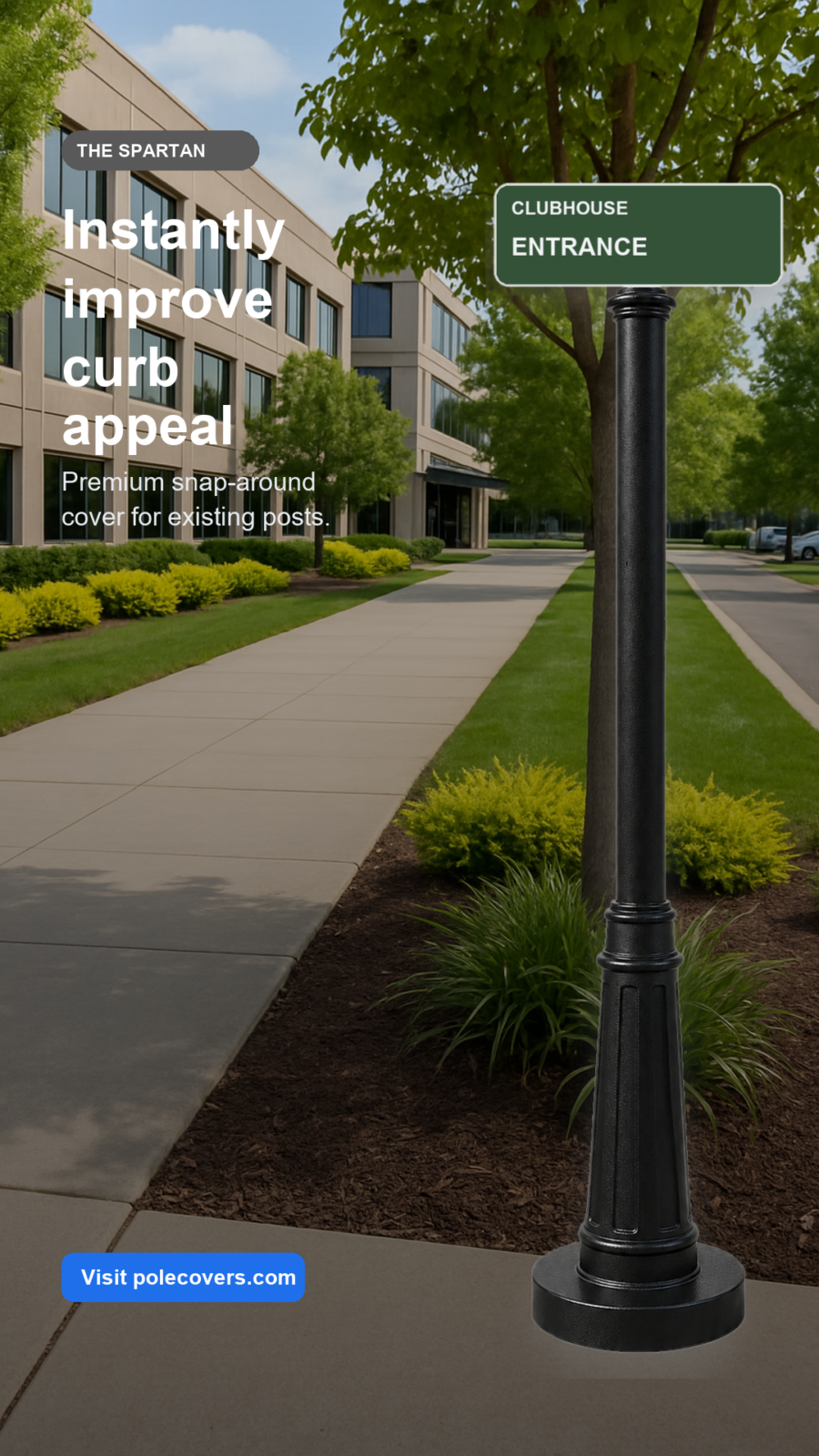
Pole Covers offers snap-around decorative plastic covers for standard sign posts, including U-channel, round, and square posts. In a municipal or downtown context, that means project teams may have a way to create a more finished sign-post appearance without redesigning the entire support condition around each sign.
For public works, this can be useful when trying to align new signs with broader beautification goals. For specifiers, it can support a cleaner presentation in places where visible hardware affects how the public perceives the project.
Why this matters in downtown and historic-adjacent settings
Not every downtown has the same design priorities. Some prioritize contemporary clarity. Others are more sensitive to how new elements sit next to legacy buildings, brick streets, decorative paving, or established civic character.
In those environments, streetscape signage is judged on more than message delivery. Residents, businesses, and visitors notice whether sign systems feel integrated or improvised.
Using the Kingston project signal only as context, the broader takeaway is straightforward: public-facing wayfinding signage can attract scrutiny when it appears disconnected from surrounding place character. That is not just about sign graphics. It can also include post appearance, exposed hardware, and the visual finish of the installation.
A cover solution may help teams think beyond the sign face and consider the full assembly.
A low-disruption planning consideration
Municipal teams often need improvements that are visible but practical. Installation disruption matters. Existing infrastructure matters. Maintenance coordination matters.
Pole Covers positions its products as a visible, low-disruption streetscape upgrade. That makes them relevant to teams that want a cleaner look without making sign-post replacement the default answer.
For a planner or public-works lead, that can support conversations such as:
- Can we upgrade sign-post appearance as part of a phased downtown program?
- Can we improve consistency across different post types already in the field?
- Can we make wayfinding hardware look more intentional without a full support-system replacement?
Those are real implementation questions, especially when budgets and field time are limited.
A real municipal proof point to reference
For buyers and specifiers who want a grounded example, Pole Covers states that the City of McAllen, Texas deployed more than 200 Pole Covers across city facilities and downtown.
That proof point is useful because it connects the product to real municipal and downtown conditions rather than purely conceptual use cases. It does not mean every city has the same requirements, but it does show that this category of upgrade has been used at municipal scale.
If your team is evaluating options for a downtown or civic sign program, that kind of precedent can help validate the discussion.
Keeping the product conversation accurate
For teams reviewing the Spartan Pole Cover, accuracy matters.
Current product truth for this content is:
- there is one standard black Spartan Pole Cover
- custom color is only a 100+ unit feasibility discussion
That is important in early planning. If a design team is expecting a broad off-the-shelf finish menu, that should be clarified up front. But if the project goal is a cleaner, more unified sign-post appearance using the standard offering, the Spartan page is the right place to start.
You can review it here: Spartan Pole Cover.
How to think about sign post covers during specification or review
If you are involved in a wayfinding signage project, it may help to review the sign-post condition as a separate checklist item rather than assuming the face design solves the entire visual problem.
Questions worth asking include:
- Are existing posts staying in place?
- Will the finished installation be highly visible in pedestrian areas?
- Are exposed posts undermining otherwise thoughtful streetscape signage?
- Does the project need a more intentional look without a full post replacement approach?
- Is the standard black option a fit for the design direction?
These questions can help determine whether a post-cover approach belongs in the conversation.
A planning takeaway for municipal and public-works teams
A wayfinding signage project is rarely just about arrows and destinations. In public settings, it is also about how the installation looks once people live with it every day.
When new signs are placed in downtown, civic, or historic-adjacent environments, the support hardware becomes part of the public-facing result. That is why sign post covers may be worth evaluating early, particularly when teams want a retrofit-friendly path that installs without replacing existing posts.
For municipalities focused on streetscape signage, that can be a practical middle ground: improve appearance, reduce visual clutter, and support a more finished presentation while working with existing infrastructure.
To explore the product directly, visit the Spartan Pole Cover page or browse the main Pole Covers website.
FAQ
Can sign post covers be used in a wayfinding signage project without replacing existing posts?
Yes. Pole Covers install without replacing existing posts, which can make them relevant when a project team wants a visible sign-post appearance upgrade while keeping existing infrastructure in place.
What kinds of public projects are a fit for this type of sign post upgrade?
They can be relevant in downtown, civic, facility, and broader streetscape signage settings where exposed sign hardware affects the overall look of the installation.
Does Pole Covers offer multiple standard colors for the Spartan Pole Cover?
Current product truth is one standard black Spartan Pole Cover. Custom color is only a feasibility discussion for 100+ units.
Are sign post covers only for new installations?
No. They are often most relevant as retrofit-oriented upgrades because they install on existing posts rather than requiring full post replacement.
Is there any municipal deployment example available from Pole Covers?
Yes. Pole Covers states that the City of McAllen, Texas deployed more than 200 Pole Covers across city facilities and downtown.
Where can specifiers review the Spartan Pole Cover?
The best starting point is the Spartan product page: https://www.polecovers.com/spartan/