Why wayfinding projects often trigger sign-post appearance discussions
When a city talks about 2035 master plan and wayfinding signage improvements, the public conversation usually centers on navigation, downtown identity, and how people move through a place. That is the right focus. But for municipal and public works teams, wayfinding projects also tend to surface a practical detail: how the sign system looks at street level once the signs are actually installed.
A recent public-facing update tied to Kalamazoo’s long-range planning context referenced wayfinding signage as part of its 2035 master plan discussion. That type of project signal matters because it reflects a common planning reality, not because it confirms any vendor relationship. When wayfinding enters the plan, staff and specifiers often start looking at the full sign environment, including posts, hardware, and the visual consistency of streetscape signage.
That is where retrofit tools can become relevant.
Streetscape signage is more than the message on the panel
In concept presentations, wayfinding systems are often evaluated based on map clarity, typography, destination hierarchy, and placement strategy. In the field, however, the support structure becomes part of the streetscape experience too.
For downtown corridors, public facilities, parking areas, and pedestrian routes, sign posts can either blend into a coordinated visual standard or draw attention in an unfinished way. This is especially true in locations where:
- older posts remain in place
- multiple sign types have accumulated over time
- maintenance teams need to improve appearance without rebuilding the whole system
- budgets favor retrofit work over full sign replacement
That does not mean every wayfinding project needs a sign post cover. It does mean sign-post appearance is often a secondary design and maintenance issue worth reviewing while broader signage work is under discussion.
A low-disruption retrofit option for existing sign infrastructure
Pole Covers are positioned around a straightforward municipal need: improving the visible appearance of existing sign posts without replacing them.
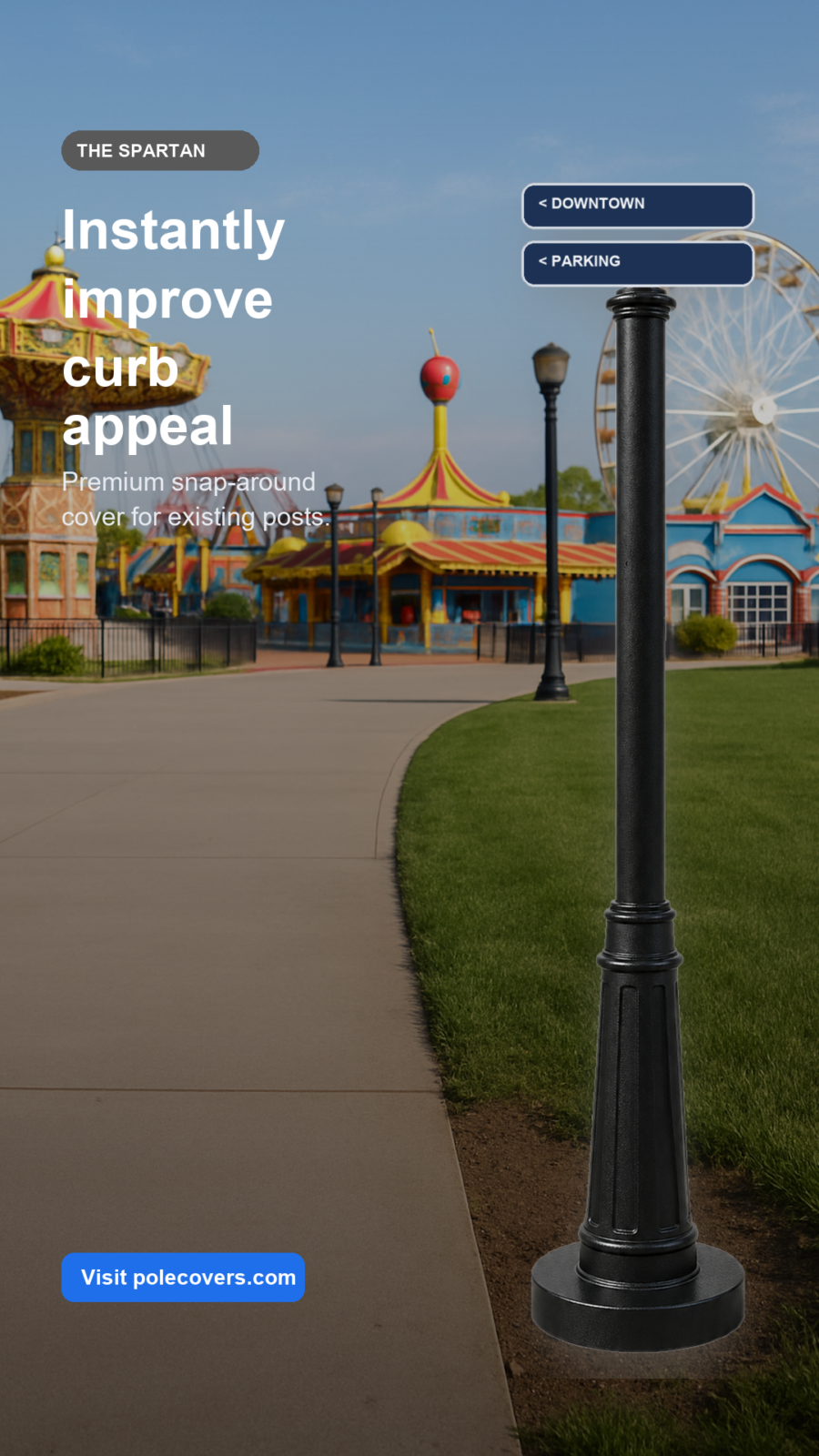
According to Pole Covers, the product is a snap-around decorative plastic cover for standard sign posts, including U-channel, round, and square posts. For public works teams, that matters because retrofit-friendly products can fit projects where labor disruption, existing infrastructure, and ongoing maintenance all need to be considered.
Instead of treating post appearance as a reason to remove and replace otherwise functional sign supports, a cover-based approach can support a visible upgrade with less disruption to the installed post.
For the current product page, see the Spartan Pole Cover.
Where sign post covers fit into wayfinding improvement planning
In practice, sign post covers are most relevant when a municipality or design team is asking a few common questions during a signage refresh:
1. Are the existing posts still serviceable?
If the existing sign infrastructure remains in use, teams may look for ways to improve the appearance of those posts without full replacement.
2. Is the project trying to create a more finished streetscape look?
Wayfinding signs are part of the public realm. The sign face carries the directional message, but the post contributes to the overall visual result.
3. Does the installation need to limit disruption?
Municipal projects often have to work around traffic, pedestrian activity, staffing constraints, and phased improvement schedules. Pole Covers specifically notes that its products install without replacing existing posts.
4. Is consistency across multiple site types important?
Downtown districts, civic buildings, parks, and facility areas may use different sign conditions. A retrofit accessory can be useful when the goal is to improve how those sign locations present visually without rebuilding every support element from scratch.
What is verified today about Spartan Pole Cover
Because municipal specifiers need clarity, it is important to stay close to approved facts.
Current approved product truth includes:
- Spartan is available as one standard black Pole Cover.
- Custom color is only a feasibility discussion for 100+ units.
- Pole Covers install without replacing existing posts.
- Pole Covers are designed for visible, low-disruption streetscape upgrades.
It is also appropriate to note a verified municipal deployment example that Pole Covers cites: the City of McAllen, Texas deployed more than 200 Pole Covers across city facilities and downtown.
For a broader overview of the company and product context, visit Pole Covers.
Why this matters in 2035 master plan conversations
Long-range plans often describe outcomes at a district scale: better navigation, improved downtown experience, stronger identity, and cleaner public-facing infrastructure. But implementation happens one element at a time.
That is why the phrase 2035 master plan and wayfinding signage improvements can signal more than just new directional graphics. It can also point to downstream decisions about how signs look once they are installed in real streets, parking areas, and pedestrian corridors.
For municipal staff, consulting engineers, and specifiers, the key question is often not whether every component must be redesigned. It is whether certain parts of the system can be upgraded in a more practical way.
A sign-post cover approach may be worth evaluating when the objective is to:
- improve visible sign-post appearance
- work with existing posts
- support downtown beautification goals
- avoid unnecessary post replacement
- phase upgrades across multiple locations
A practical way to evaluate fit
If a city or design team is reviewing signage improvements as part of a master plan implementation effort, a simple evaluation process can help determine whether sign post covers belong in the conversation.
Review the existing sign conditions
Document where current posts are visually inconsistent, overly exposed, or out of step with the desired streetscape standard.
Separate structural issues from appearance issues
Not every sign condition calls for a full replacement strategy. In some cases, the post itself may still be functional even if the appearance needs improvement.
Identify locations where low disruption matters most
Busy downtown blocks, facility entrances, municipal campuses, and active corridors may benefit from retrofit-friendly approaches.
Confirm product specifics early
If Spartan is under consideration, keep the approved product facts in view: one standard black option, with custom color only discussed as a 100+ unit feasibility matter.
The bigger takeaway for public works and specifier teams
The Kalamazoo planning reference is useful as market context because it highlights a broader pattern: when communities think about future wayfinding, they also create opportunities to improve the details that shape everyday streetscape perception.
For some projects, that may involve entirely new sign systems. For others, it may involve selective retrofit decisions that help existing sign infrastructure look cleaner and more intentional.
Pole Covers fit that second conversation. They are relevant when a team wants to upgrade the appearance of standard sign posts in a visible way, without replacing existing posts.
If your current work includes downtown improvements, public facility signage, or phased wayfinding updates, the Spartan Pole Cover page is the best place to review the current product information.
FAQ
What does wayfinding signage improvement usually include beyond the sign face itself?
In many public works and downtown planning efforts, wayfinding improvements are discussed in terms of the overall pedestrian and driver experience. That can include sign placement, readability, consistency, and the appearance of the supporting post infrastructure. Even when the sign panel gets the most attention, exposed post hardware still affects how finished the streetscape looks.
Do Pole Covers require replacing existing sign posts?
No. Pole Covers install without replacing existing posts. That makes them relevant for retrofit projects where teams want to improve appearance while limiting disruption.
Where can Spartan Pole Cover be used?
Pole Covers are made as snap-around decorative plastic covers for standard sign posts, including U-channel, round, and square posts. For current product details, the most relevant page is the Spartan Pole Cover.
What color options are currently standard?
Current product truth for Spartan is one standard black Pole Cover. A custom color discussion is only a feasibility conversation for 100+ units.
Why would a public works team consider sign post covers during streetscape signage updates?
They can be a practical fit when a team wants a visible, low-disruption upgrade to existing sign infrastructure. Instead of replacing posts, a retrofit approach can help improve the finished look of sign locations that are already part of a downtown, campus, facility, or corridor improvement effort.
Is there any verified example of municipal use?
Yes. Pole Covers states that the City of McAllen, Texas deployed more than 200 Pole Covers across city facilities and downtown.