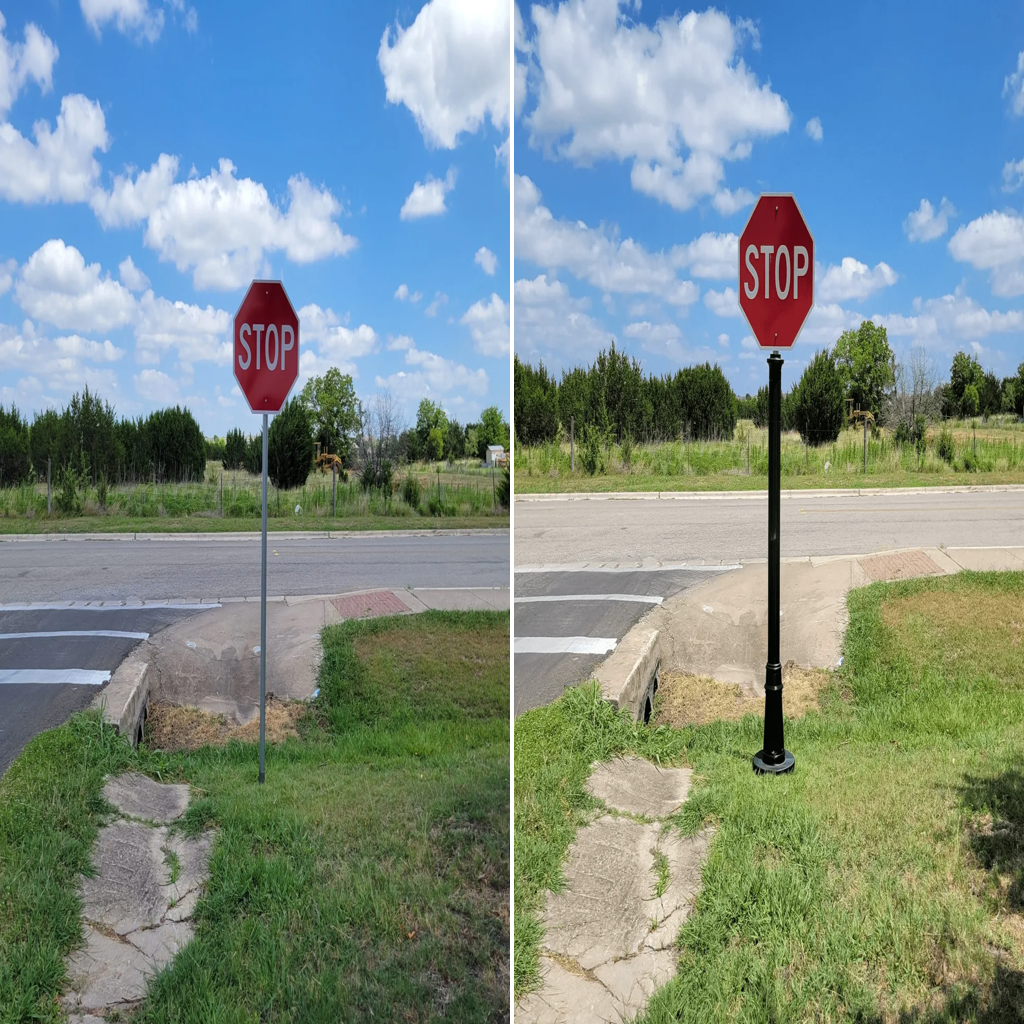
Streetscape momentum puts small details under a brighter spotlight
Recent project signals around downtown and Main Street improvement efforts show how much attention communities continue to place on streetscape quality. Public coverage has highlighted streetscape-related activity tied to Downtown Honesdale enhancements and a mosaic mural, a streetscape project information session in Potsdam, and a streetscape grant story in Shamokin. Those items are useful as market context because they reflect a larger pattern: municipalities are investing in visible public-facing upgrades that shape how downtown areas look and feel.
When that kind of work moves forward, attention usually goes to paving, lighting, landscaping, banners, wayfinding, and storefront-facing improvements. But smaller pieces of sign infrastructure also affect the finished result. Exposed sign posts and hardware can stand out more once a corridor has been otherwise refreshed.
That is where sign post covers enter the conversation.
Why sign posts matter in streetscape signage
In many downtown corridors, sign posts do important work without adding much visual value. They support parking signs, regulatory signs, pedestrian guidance, and wayfinding elements. Functionally, they are necessary. Aesthetically, they can become part of the clutter that cities try to reduce during a beautification effort.
For municipal and public works teams, this creates a familiar challenge:
- the post is still usable
- the sign remains necessary
- replacement may add cost and disruption
- the streetscape now needs a more finished appearance
That is why retrofit-oriented solutions are worth evaluating. Instead of assuming every visible post must be removed and replaced, many teams look for ways to improve what is already in place.
According to approved Pole Covers product information, Pole Covers install without replacing existing posts. That matters in streetscape work because reducing replacement scope can help preserve momentum on projects where time, coordination, and field disruption all matter.
Using Main Street projects as context for product evaluation
The recent project mentions tied to Honesdale, Potsdam, and Shamokin should not be read as customer references or purchase signals for Pole Covers. They are simply examples of the kind of downtown revitalization and streetscape activity that often causes municipalities to reassess the appearance of sign infrastructure.
When a town is improving a Main Street block, adding public art, updating corridor features, or planning broader downtown enhancements, sign hardware becomes more noticeable for three reasons:
- Improved surroundings create contrast. Newly refreshed streetscapes make old posts look older.
- Wayfinding and regulatory signs remain highly visible. Even after larger improvements, sign posts still sit at eye level throughout the corridor.
- Maintenance teams need practical retrofit options. Public works departments often need improvements that fit existing conditions instead of forcing full replacement.
In other words, streetscape investment raises the standard for every visible element, including posts that previously went unnoticed.
A practical role for the Spartan Pole Cover
For municipalities reviewing options, the relevant product page is the Spartan Pole Cover. Based on approved product truth, the current standard offering referenced here is one standard black Spartan Pole Cover. If a buyer wants to discuss a custom color, that is only framed as a feasibility discussion for orders of 100+ units.
That limitation is important to state clearly because public buyers and specifiers need accurate product boundaries, not assumptions.
Within those boundaries, the product story is straightforward:
- it is a decorative cover for standard sign posts
- it supports retrofit use rather than post replacement
- it is intended for visible, low-disruption streetscape upgrades
That makes the product relevant when a team is trying to improve the look of streetscape signage while keeping existing sign infrastructure in service.
Where sign post covers can make sense for public works teams
A sign post cover will not solve every streetscape issue. But it can be a useful fit in situations like these:
Existing posts are structurally fine but visually dated
This is one of the most common public works conditions. The sign is needed, the post is functioning, but the exposed hardware no longer fits the upgraded corridor.
Downtown beautification needs visible wins without a full tear-out
Many streetscape programs include a mix of major capital work and smaller finishing details. A post cover can support the visual side of the plan without requiring post-by-post replacement.
Municipal teams want lower-disruption upgrades
Approved proof points describe Pole Covers as designed for visible, low-disruption streetscape upgrades. That makes them worth considering in active downtown environments where minimizing disruption is part of the project goal.
Streetscape signage needs a more finished appearance
Wayfinding and regulatory systems can benefit when the supporting posts look more intentional as part of the overall streetscape.
A verified municipal proof point
When municipal buyers ask whether this kind of product has been used in a civic environment, the approved proof point available here is specific: the City of McAllen, Texas deployed more than 200 Pole Covers across city facilities and downtown.
That is useful because it shows the product has municipal relevance in both downtown and broader public-facing settings. It should not be expanded into claims about performance, pricing, maintenance outcomes, or preferences beyond the approved evidence.
Questions to ask before specifying sign post covers
If your team is evaluating streetscape upgrades around Main Street, downtown blocks, or public facilities, a few practical questions can help determine fit:
Are we trying to replace posts, or improve their appearance?
That distinction matters. If the post itself needs replacement, a cover may not be the first step. But if the goal is appearance improvement while retaining existing infrastructure, a cover becomes more relevant.
Is visual consistency important across multiple signs?
Streetscape work often succeeds or fails on consistency. If some elements are refreshed and others are left exposed, the corridor can still look unfinished.
Do we need a retrofit-friendly option?
Retrofit compatibility is often valuable in municipal work because existing conditions vary and project schedules are tight.
Are we staying within confirmed product specs?
This is especially important for public-sector planning. In this case, that means understanding that the standard product discussed here is the black Spartan Pole Cover, with custom color only discussed as a feasibility matter for 100+ units.
Why this topic matters now
The broader significance of current streetscape coverage in places like Honesdale, Potsdam, and Shamokin is not that those organizations are tied to Pole Covers. They are not presented that way here. The significance is that these public project signals reflect a continuing municipal focus on downtown revitalization, beautification, and public-realm quality.
As more communities revisit Main Street design, they also revisit the smaller supporting components that affect visual cohesion. Sign posts are easy to overlook during early planning, but noticeable after major improvements are complete.
That is why a product category like streetscape signage covers deserves consideration during project scoping rather than after installation is finished.
A simple way to evaluate next steps
If your municipality or public works team is looking at ways to improve sign-post appearance as part of a downtown or corridor upgrade, start by reviewing the Spartan Pole Cover page. It provides the best starting point for understanding whether a retrofit cover approach aligns with your sign infrastructure and streetscape goals.
You can also visit the Pole Covers homepage for a broader view of the company and product category.
In many streetscape projects, the biggest visual improvements come from major capital elements. But once those are addressed, smaller details begin to matter more. For municipal teams trying to create a cleaner, more intentional public realm, upgrading exposed sign posts can be one of those practical finishing moves.