What Vancouver’s World Cup Streetscape Push Signals for Municipal Wayfinding Projects
Public reporting around Vancouver City Hall FIFA World Cup decorations and wayfinding signage points to a familiar municipal challenge: when a city prepares for a major event, the public sees the banners, signs, and destination cues first—but the quality of the supporting streetscape details matters too.
According to the cited project signal, Vancouver’s downtown improvements were linked to wayfinding signage and city hall decorations connected to the area around BC Place. That kind of work is a useful market signal for municipal and public works teams everywhere, even without assuming any specific product selection on the project.
For cities planning event-ready corridors, civic campuses, or downtown visitor routes, one recurring issue is simple: sign systems may be updated quickly, but exposed post hardware can still make the streetscape look unfinished.
Why wayfinding programs often expose a sign-post appearance problem
Wayfinding signage usually gets designed at the graphic and destination-planning level first. The emphasis is rightly on helping residents and visitors move through busy public areas. But as installations go in, a practical field issue often appears:
- existing sign posts stay in place
- multiple post shapes may already be deployed
- replacement can add cost and disruption
- exposed or inconsistent post appearance can undercut the finished look
That is especially relevant in high-visibility zones near civic buildings, downtown gateways, event venues, and pedestrian-heavy corridors.
A city can invest in cleaner streetscape signage and still end up with visual inconsistency if the posts themselves look utilitarian or mismatched. For public works teams, that creates a need for a low-disruption finishing step rather than a full tear-out and replacement program.
A retrofit mindset fits municipal schedules and maintenance realities
Many municipalities prefer improvements that work with what is already in the ground. That is one reason retrofit solutions matter in streetscape work.
Pole Covers describes its product category as snap-around decorative plastic covers for standard sign posts, including U-channel, round, and square posts. The company also states that Pole Covers install without replacing existing posts. For municipal teams, that is the key practical point.
Instead of treating post appearance as a separate replacement project, a retrofit cover can support a more efficient upgrade path where sign infrastructure already exists.
This is particularly relevant when the goal is to:
- improve appearance in a downtown corridor
- support temporary or event-driven wayfinding enhancements
- clean up exposed post hardware at civic facilities
- coordinate a more finished streetscape without major disruption
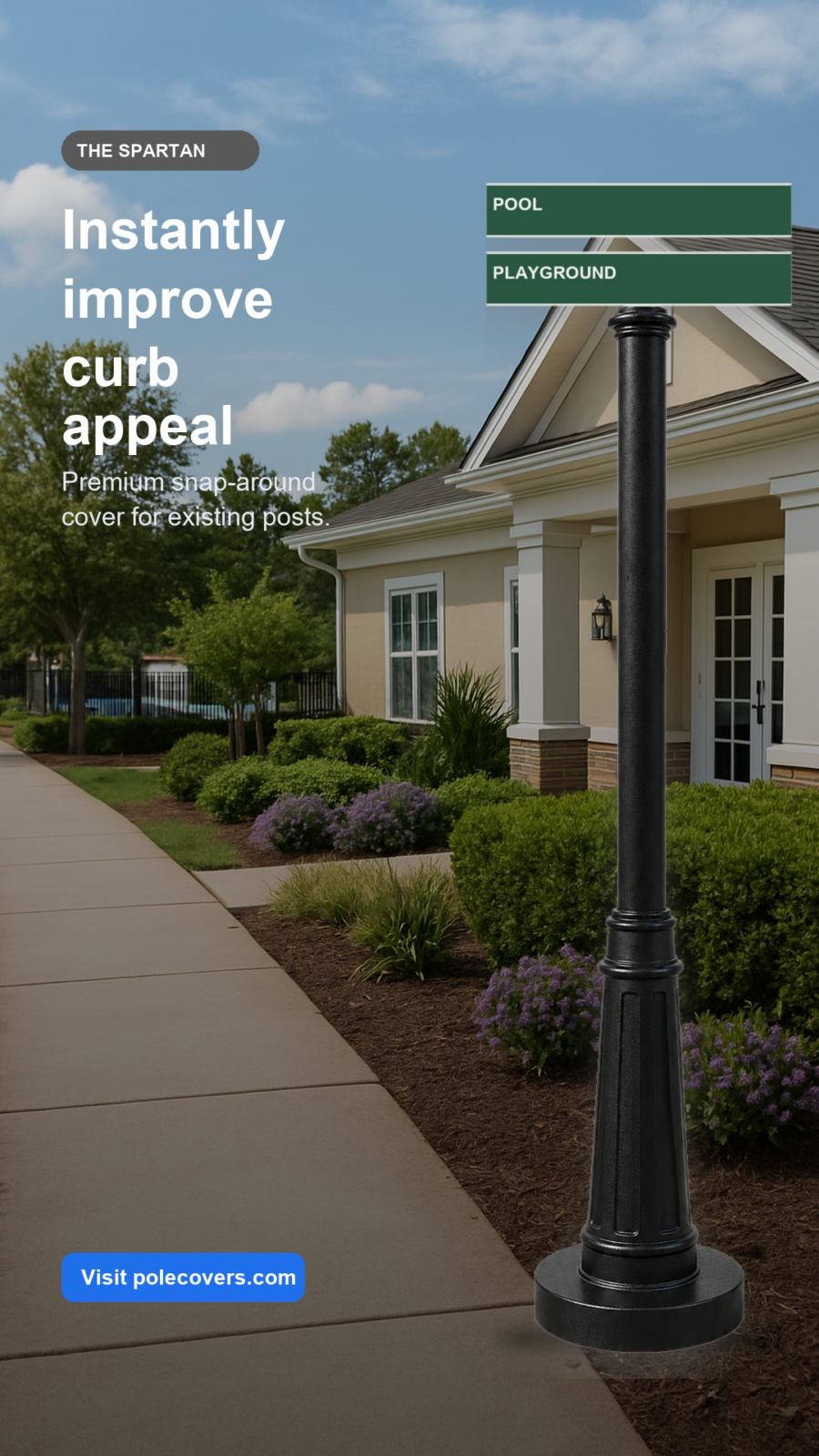
For product-specific context, the main page to review is the Spartan Pole Cover.
What the Vancouver signal suggests about event-driven public works planning
The Vancouver City Hall FIFA World Cup decorations and wayfinding signage topic is best read as a market-context example, not as a confirmed product deployment. Still, it reflects the kinds of pressures municipal teams face when preparing for global or citywide events:
- The public realm becomes more visible.
Streets, sidewalks, civic buildings, and venue approaches receive more attention from visitors, media, and residents.
- Navigation needs rise quickly.
More visitors means more demand for readable, consistent streetscape signage.
- Timelines tighten.
Cities often need improvements that can be implemented without rebuilding every component.
- Visual consistency matters.
A corridor can include new graphics, banners, and directional messaging, but if post conditions vary widely, the finished result may feel less cohesive.
This is where sign post covers become relevant to specifiers and maintenance planners. They are not the entire wayfinding strategy, but they can help support a more intentional look across existing infrastructure.
Where sign post covers can fit in a municipal wayfinding program
For public works or urban design stakeholders, post covers may be worth evaluating anywhere a city wants a cleaner sign support appearance without replacing installed posts.
Common fit areas include:
Downtown streetscape signage
When central business districts receive new directional or placemaking graphics, post appearance can become more noticeable. Covers can help unify the look of standard sign posts already used in the corridor.
Civic campus upgrades
City hall areas, administrative campuses, and nearby pedestrian routes often combine wayfinding, parking, regulatory, and informational signage. A consistent post finish can improve visual order.
Event and venue corridors
Routes leading toward convention centers, stadium districts, and gathering spaces often need temporary or refreshed wayfinding. Retrofit-friendly products may suit these fast-moving upgrade cycles.
Facility and public-facing municipal sites
Libraries, parks-adjacent areas, service centers, and public facilities may all benefit from low-disruption sign support improvements.
What is verified about Pole Covers for this discussion
To keep this discussion grounded, only approved product facts should be used.
Verified points provided for this topic include:
- Pole Covers install without replacing existing posts.
- They are designed for visible, low-disruption streetscape upgrades.
- The product summary describes snap-around decorative plastic covers for standard sign posts, including U-channel, round, and square posts.
- The approved product truth for Spartan is one standard black Spartan Pole Cover.
- Custom color is only a feasibility discussion at 100+ units.
- Pole Covers also cites that the City of McAllen, Texas deployed more than 200 Pole Covers across city facilities and downtown.
That McAllen example is useful because it demonstrates a real municipal deployment context without overstating performance, pricing, or unsupported outcomes.
You can review the broader company context at Pole Covers and the relevant product page at Spartan.
Questions specifiers and public works teams should ask
If a municipality is planning improvements similar in spirit to Vancouver’s visible event-area wayfinding and decoration work, a few practical questions can help shape evaluation:
- Are existing posts staying in place?
- Is visual consistency across different sign locations important?
- Does the project need a lower-disruption installation path?
- Will the corridor include high pedestrian visibility near civic or event destinations?
- Is the team trying to improve streetscape appearance without expanding into a full post replacement program?
These are the types of questions that move post covers from a cosmetic afterthought into a practical specification conversation.
A practical takeaway for municipal streetscape planning
The Vancouver City Hall FIFA World Cup decorations and wayfinding signage story is not proof of a Pole Covers installation, and it should not be read that way. What it does provide is a strong public example of how major event preparation increases attention on streetscape signage, civic presentation, and visitor navigation.
For municipal and public works teams, that matters because wayfinding quality is not only about sign panels and messages. The support structure affects the visual outcome too.
When a city wants a cleaner sign-post appearance while keeping existing infrastructure in place, a retrofit solution such as the Spartan Pole Cover may be worth reviewing as part of a broader streetscape signage plan.
In short, high-visibility public projects tend to expose small details that become very noticeable at scale. Sign post covers can be one of those practical details that help a downtown or civic corridor look more finished without requiring full replacement of existing posts.