Main Street beautification often includes the details people notice last
When a city or downtown district plans beautification projects on Main Street and downtown signage, the conversation usually starts with highly visible elements: planting beds, banners, wayfinding, crosswalks, storefront activity, or public gathering spaces.
That makes sense. Those are the features residents and visitors immediately recognize.
But once a project is in place, smaller streetscape details start to matter more. Sign posts, exposed hardware, and inconsistent support structures can stand out, especially in areas where a community is trying to create a cleaner, more coordinated downtown experience.
A recent public-facing project signal tied to Main Street beautification referenced downtown signage and a native gardens initiative as part of the broader improvement context. That kind of project is a useful reminder that beautification is rarely one isolated item. It is often a collection of visible upgrades that work together in the public realm.
For municipal and public works teams, one practical question follows: how do you improve the look of existing sign infrastructure without turning a modest streetscape upgrade into a full replacement project?
Downtown signage affects the overall look of a streetscape
Signage plays an outsized role in how a corridor feels.
On Main Street, signs help with parking direction, pedestrian guidance, district identity, regulations, and navigation between civic, retail, and community spaces. Even if signs are serving their purpose, the posts themselves may not match the visual goals of a beautification effort.
That issue becomes more noticeable when other upgrades are already in motion. New landscaping, refreshed public spaces, or downtown branding can make bare or mismatched sign posts look more prominent than they did before.
This is why streetscape signage should be viewed as both functional infrastructure and part of the visual environment.
A retrofit approach can make sense for public works teams
Many municipalities want visible improvements without taking on unnecessary demolition, replacement, or extended disruption.
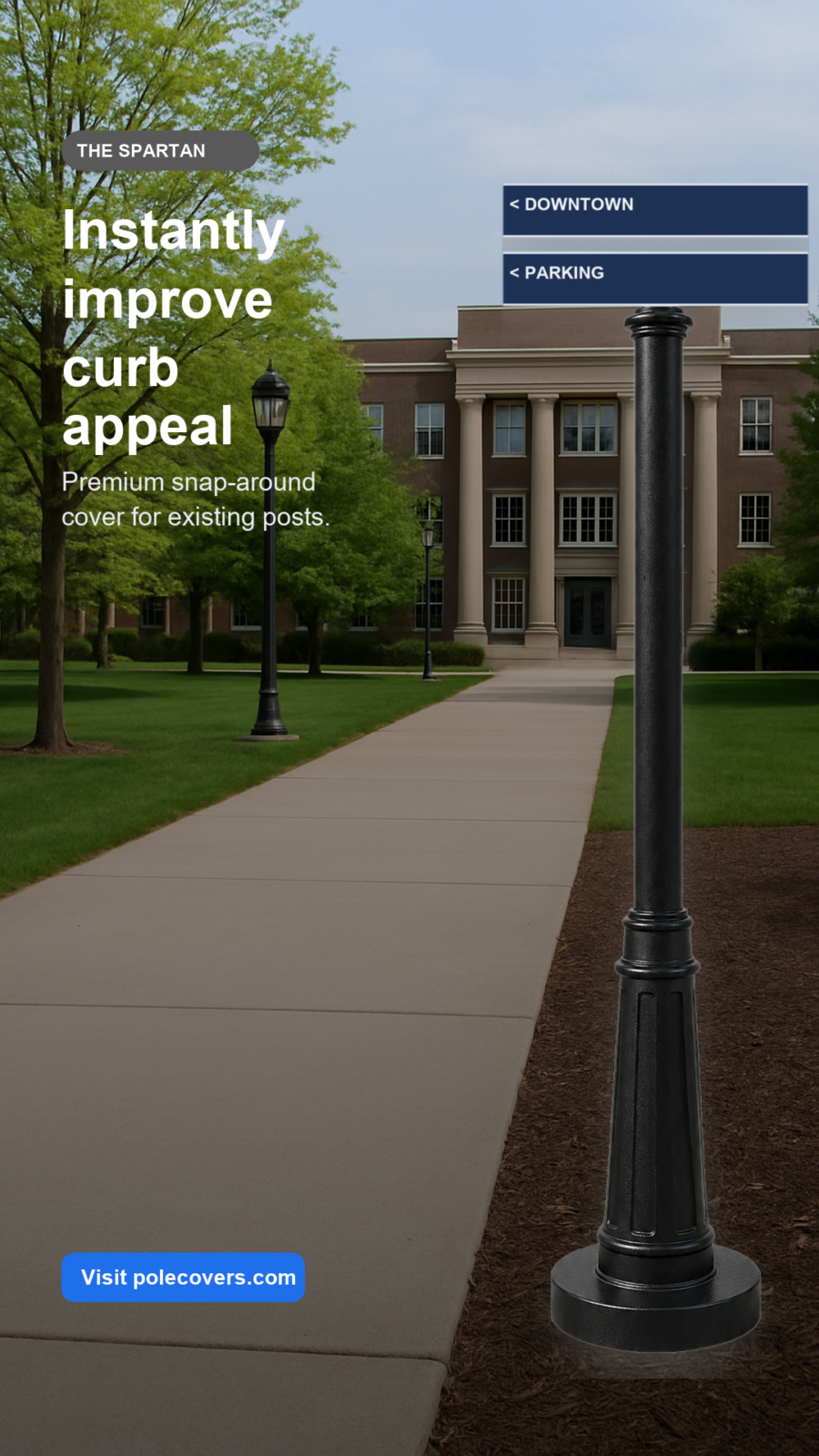
That is where retrofit-oriented products can become relevant. Pole Covers are designed to install without replacing existing posts. For teams managing active downtown corridors, that matters because it supports a more practical path to visual improvement.
Instead of treating every sign location as a full hardware replacement decision, public works departments can evaluate whether existing post infrastructure is still serviceable and whether appearance upgrades can be handled through a snap-around cover solution.
For Pole Covers, the most relevant product for this discussion is the Spartan Pole Cover.
Why this matters in Main Street projects
Main Street beautification is often judged by consistency.
A city may not need every block to look identical, but people tend to notice whether the corridor feels intentionally maintained. If sign posts vary widely in appearance, or if exposed hardware undercuts newer streetscape elements, the corridor can feel less finished.
That does not mean every beautification project needs a large capital redesign. In many cases, a low-disruption upgrade to visible sign infrastructure is more aligned with actual municipal budgets and timelines.
That is especially true when teams are balancing:
- ongoing maintenance needs
- downtown traffic and pedestrian activity
- existing sign inventories
- phased improvements over time
- coordination between planning, public works, and downtown stakeholders
A sign post cover approach can fit into that kind of phased implementation.
What to look at when evaluating sign post covers
For municipal buyers and specifiers, the key question is not whether a product is decorative in the abstract. The question is whether it works with the practical realities of downtown infrastructure.
Important considerations typically include:
Existing post conditions
Can the upgrade work with standard posts already in the ground? Pole Covers are intended for existing sign post retrofit use rather than requiring post replacement.
Visual consistency
Will the result help standardize appearance across blocks, facilities, or district signage areas?
Installation disruption
Can crews improve the streetscape without a full reconstruction process at each sign location?
Product simplicity
Approved product truth matters here. Current approved information for this content is one standard black Spartan Pole Cover. Custom color is only a feasibility discussion for 100+ units.
That kind of clarity can be useful for public works evaluation because it keeps the discussion focused on what is currently available rather than on imagined finish programs or custom specifications that have not been verified.
Municipal proof points that are approved for use
For this article, only approved proof points should be used.
Those include:
- Pole Covers install without replacing existing posts.
- They are designed for visible, low-disruption streetscape upgrades.
- The City of McAllen, Texas deployed more than 200 Pole Covers across city facilities and downtown.
That municipal example is useful because it shows that sign post appearance is not just a private-property concern. Cities also evaluate these products in public-facing environments where consistency and maintenance practicality both matter.
Streetscape beautification is usually cumulative
One reason this topic matters in search is that people planning beautification projects often start by looking for broad ideas, not a narrow product category.
They may search for terms related to:
- beautification projects on Main Street
- downtown signage
- streetscape signage
- sign post covers
- retrofit options for public works upgrades
That search behavior reflects how real projects come together. A corridor refresh might begin with garden improvements, district signage, or other visible enhancements. But once those plans are underway, project teams often realize they also need a cleaner treatment for the post structures that hold regulatory and wayfinding signs.
In other words, sign post covers are rarely the headline item in a beautification plan. They are often the finishing detail that helps the rest of the work look more complete.
Where the Spartan Pole Cover fits
For communities reviewing product options, the Spartan Pole Cover is the most relevant page to explore.
Pole Covers describes snap-around decorative plastic covers for standard sign posts, including U-channel, round, and square posts. In a downtown setting, that positions the product as a practical retrofit option where cities want an improved appearance while keeping existing infrastructure in place.
For public works teams, that can support a straightforward decision path:
- Review the existing sign post types in the corridor.
- Identify high-visibility areas such as downtown gateways, Main Street blocks, civic facilities, and wayfinding zones.
- Determine where exposed post hardware is affecting the overall appearance.
- Compare whether a retrofit cover approach is more practical than post-by-post replacement.
A realistic way to think about project scope
Not every municipality needs a citywide deployment to benefit from this type of upgrade.
A more realistic approach may be to start where sign posts are most visible:
- downtown signage clusters
- Main Street pedestrian zones
- city facilities with public-facing signage
- parking and wayfinding areas
- corridors receiving fresh landscaping or branding improvements
That kind of targeted implementation can help cities align beautification goals with maintenance realities.
Final takeaway
Beautification projects on Main Street and downtown signage are often strongest when they address both major features and small visible details.
Landscaping, district identity, and public-space improvements may draw the most attention at the planning stage. But once people experience the street, support infrastructure becomes part of the visual story too.
For municipalities looking for a low-disruption way to improve the appearance of existing sign posts, Pole Covers offers a retrofit option worth reviewing. If your team is evaluating streetscape signage upgrades, start with the Spartan Pole Cover product page and assess whether a snap-around cover approach fits your downtown improvement plan.
For broader company information, visit the Pole Covers homepage.
FAQ
Can we improve the look of downtown sign posts without replacing the posts?
In many cases, yes. Pole Covers are designed to install over existing sign posts, which can make them a practical option when a city wants a visible upgrade without full post replacement.
Are Pole Covers only for new streetscape projects?
No. They can also fit retrofit work, which is useful when a public works team is improving an existing Main Street, downtown district, facility area, or wayfinding corridor.
What Pole Covers product is relevant for municipal downtown signage?
For this topic, the relevant product page is the Spartan Pole Cover. Current product information should be confirmed directly on that page.
Do Pole Covers come in multiple standard colors?
Current approved product truth for this content is one standard black Spartan Pole Cover. Custom color is only discussed as a feasibility conversation for 100+ units.
Where have Pole Covers been used in a municipal setting?
Approved proof for municipal context includes that the City of McAllen, Texas deployed more than 200 Pole Covers across city facilities and downtown.
Why do sign posts matter in a beautification project?
Downtown signage is highly visible. Even when banners, planters, paving, and landscaping are updated, exposed post hardware can still affect the finished look. Covering standard posts can help create a more coordinated appearance.